WORKSHOP
OVERVIEW
There are three ways to bring The Hero C.O.D.E.™ to your students: a workshop for grades 5 through 8, a workshop for grades 9 through graduate school, and a keynote or commencement address. All three run on the same Code. What changes is the age of the audience and how deep the room goes.
The Hero C.O.D.E. helps young people see themselves as the heroes of their own lives. It borrows the hero's journey, the story arc students already know from books and film, and uses it to carry four leadership principles: Courage, Own a new story, Dream big, and Execute boldly.
Clarissa weaves her own story through every session, so students hear the framework from someone who lived it. Delivery is available in English, Spanish, or seamlessly bilingual, which makes the program especially effective with bilingual and English language learner populations.
| Format | Length | Audience | Materials |
|---|---|---|---|
| Workshop, Grades 5 to 8 | 45 to 90 minutes | Middle school and younger | Printed handout |
| Workshop, Grades 9 to graduate | 45 to 90 minutes | High school, undergraduate, graduate, young adults | Phones and QR code |
| Keynote or commencement | Keynote 15 to 30 minutes; commencement about 10 | Any age, any room size | None |
THE WORKSHOP:
GRADES 5 TO 8
The goal: dream bigger. Students should walk out wanting more for themselves and wanting to make the world better by being exactly who they are.
This version is concrete, fast, and warm. It opens with characters students already love, then moves through the four letters of the Code, each one paired with a short writing activity on a printed handout. Clarissa tells her origin story simply here: humble beginnings, one mistake, and what perseverance made possible. Fewer heroes are covered so there is more time for the activities and for students to read out what they wrote, which is often the part they remember most.
THE WORKSHOP:
GRADES 9 TO
GRADUATE
The goal: bigger ideas, deeper honesty. Older students can hold more, so this version goes further in both directions.
Clarissa tells her origin story in full, including working-poor beginnings, dual identity, bullying, depression, and trauma passed down through her family. The limiting beliefs segment becomes a four-step inquiry rather than a single question, and it names imposter syndrome directly. Participation runs through phones and a QR code, so responses can be shared live and anonymously, which changes what students are willing to say.
Be the light. This version carries a segment the younger one does not: being the light, and the idea that leadership begins with a decision about how you show up rather than with a title or a stage. Clarissa shares stories of everyday people doing exactly that: the classmate who welcomes the new student, the neighbor who organizes when no one asked, the young person who speaks up when staying quiet would be easier. Heroism is not reserved for history books. Being the light is a choice available every day.
A note for coordinators. The origin story in this version names depression and family trauma. Clarissa handles it briefly and always in service of the reframe, but let her know in advance if your group needs a lighter approach.
THE KEYNOTE &
COMMENCEMENT
Same Code, bigger room, no breakout work. Props, show-of-hands moments, and call and response keep the energy up. Best for assemblies, orientations, leadership summits, and campus events. The keynote runs 15 to 30 minutes.
Commencement and graduation remarks are a shorter build, about 10 minutes, personalized to the age of the graduating class. For a graduating class, the closing leaves students with the C.O.D.E. as something to carry into their next chapter.
Audiences leave believing their circumstances are not a ceiling, convinced their gifts are real and worth sharing, and ready to be the light the world needs right now.
LEARNING
OBJECTIVES
Grades 5 through 8: by the end of the session, students will be able to
Recognize the four stages of the hero's journey in a story they already know
Explain the four parts of the Code in their own words
Name one thing they would attempt if they knew they could not fail
Identify one belief they hold about themselves and write a truer one in its place
Describe what they want to be remembered for twenty years from now
Leave with a written roadmap naming one thing to keep believing and one thing to start doing
Grades 9 through graduate school: by the end of the session, participants will be able to
Map their own life onto the hero's journey, setbacks included
Run a limiting belief through a four-step inquiry: is it objectively true, how do I know, who would I be without that thought, and what is a more empowering one
Recognize imposter syndrome as a normal response to leaving a comfort zone rather than evidence of not belonging
Reframe their own circumstances as fuel rather than as a ceiling
Identify their gifts across five dimensions: natural talent, lived experience, way of seeing the world, what they are called to create, and who they are meant to inspire
Articulate a twenty-year vision and convert it into commitments they can act on now
Define what it means to be the light and name one specific way to do it this week
SESSION
STRUCTURE
Both workshops run 45 to 90 minutes and follow the same five steps. Notes show where the two age bands diverge.
Welcome and introductions. A community-building opener in which every participant introduces themselves, in the language they prefer. Student feedback often names this among the most memorable moments.
The hero's journey. The four-stage arc, illustrated through familiar stories and real heroes. Grades 5 to 8 open with characters students already love and cover fewer heroes. Grades 9 and up cover a wider roster and map it to their own lives, setbacks included.
Setting the agenda: The Hero C.O.D.E. Clarissa frames the session's central question and previews the Code, placing each participant at the center of the journey ahead.
The C.O.D.E. Four segments, each pairing a principle with a written activity. Courage: what would you do if you knew you could not fail? Own a new story: Clarissa's origin story sets up the limiting beliefs work. Dream big: time travel, twenty years into the future. Execute boldly: a roadmap from the future self back to the present self. Grades 5 to 8 work on a printed handout, hear a simpler origin story, rewrite one belief, and get more time to read their writing aloud. Grades 9 and up respond by phone through a QR code, hear the full origin story, run the four-step inquiry, and talk about imposter syndrome directly.
Closing: Live your code. Students leave as the heroes of their own stories. Grades 5 to 8 leave with their handout and roadmap in hand. Grades 9 and up close with the be the light segment and one specific way to show up this week.
WHY THE HERO
C.O.D.E. WORKS
Narrative pedagogy. Joseph Campbell's monomyth is the organizing structure. Because students already know the arc, it anchors abstract leadership ideas and reinforces ELA work on narrative structure, character, and theme.
Modeling instead of lecturing. Adult observers consistently name Clarissa's own story as the element students connect with most.
Real heroes, mapped to the arc. Albert Einstein, Michael Jordan, LeBron James, Frida Kahlo, Dr. Martin Luther King Jr., the Mirabal sisters, Justice Sonia Sotomayor, Maya Angelou, Audre Lorde, Malala Yousafzai, Mahatma Gandhi, and others. The roster shifts with the audience and the time available, and it is deliberately diverse in gender, culture, language, era, and field.
Cognitive reframing. Failure is treated as information, which lowers the cost of trying. Self-narratives are treated as changeable rather than fixed.
Future-self visualization. Students write themselves forward twenty years, then write back to who they are today.
ALIGNMENT WITH SEL & ACADEMIC STANDARDS
The program maps onto self-awareness, self-management, and responsible decision-making. Its literary framework supports ELA work on narrative structure, character, and theme. The written activities double as authentic writing samples teachers can extend after the session.
AUDIENCE, FORMAT & LOGISTICS
Contact Clarissa to discuss cost and availability. Available in person or virtually, in English, Spanish, or bilingual. Requires A/V and, for the younger workshop, printed handouts, which are provided.
What she asks for in return matters more to her than the fee: honest feedback on how to make the program better. Younger students complete a printed feedback form, which is provided. Older students respond virtually through the QR code. Educators, administrators, and coordinators email their feedback to Clarissa directly. Everyone who hosts a session receives a copy of the results.
WHAT
AUDIENCES SAY
The Hero C.O.D.E. has been delivered in middle schools, on college campuses, at a leadership summit, and through a statewide youth mentoring program.
A Bronx middle school principal pointed to the interactive framework as the most resonant part, noting that the superhero anchor kept engagement high and made real breakout discussion possible. Jennifer Rogers, a site coordinator with a statewide youth mentoring program, called the session "informative, engaging and transformative." The Director of Special Programs at SUNY Purchase wrote that it was one of the students' favorite sessions all summer.
Students put it more plainly. One middle schooler wrote that the workshop "made me want to dream bigger." Another thanked Clarissa "for telling me that I can make the world a better place." A SUNY Purchase student wrote: "I struggle with imposter syndrome myself. I always doubt myself and think I don't belong or I'm not good enough… this just was a reminder to not give up."
AFTER THE
SESSION
Educators receive discussion questions and a simple plan for keeping the Code alive. The full lesson plan is part of the Classroom Kit, provided after a delivered workshop. Clarissa also shares the feedback collected from the session along with her recommendations for future programming.
A few things that work:
Send younger students home with a certificate of achievement. Each student writes one thing they learned as an affirmation or a dream, something like "I can dream bigger," then posts it on a classroom bulletin board or hangs it in their room.
Revisit the roadmaps two to four weeks out. Ask what students have started doing and its impact.
Place a character from a current novel, or a historical figure, onto the four-stage arc.
Name a courage moment out loud in class when you see one.
When a student is discouraged, ask what the old story is and what the new one could be.
Discussion questions to explore the concepts further:
Think of a time you did not try something because you were afraid to fail. If failure is just information, what might you have learned by trying?
Where do limiting beliefs come from? Whose voice do you hear when you tell yourself "I'm not good enough"? Is it telling the truth?
Which of the heroes we discussed most inspired you? What was their ordinary world and their call to adventure?
What is one dream that feels too big to say out loud? What would need to be true for it to become a plan?
Twenty years from now, what do you hope people say about the mark you left? What can you start doing this month to move toward it?
The full set of discussion questions comes with The Hero C.O.D.E. Classroom Kit →
ANOTHER WAY TO
WORK TOGETHER
Clarissa also offers adult keynotes and workshops for leaders and their teams, ideal for faculty and staff development days, district leadership retreats, administrator conferences, and association events.
FROM SURVIVING TO THRIVING
A framework for breaking the imposter cycle in leadership. Keynote, for leaders and executives.
CULTURE RECEIPTS™
Stop guessing, read the room, reset culture, lead with care. Keynote or workshop, for executive and people leaders.
CHANGE IS HARD. LEAD ANYWAY.
Leading through change with listening, honesty, and light. Keynote or workshop, for managers and teams in transition.
All are available in English, Spanish, or bilingual, virtually or in person. Book at clarissaspeaks.com.
ABOUT THE
PRESENTER
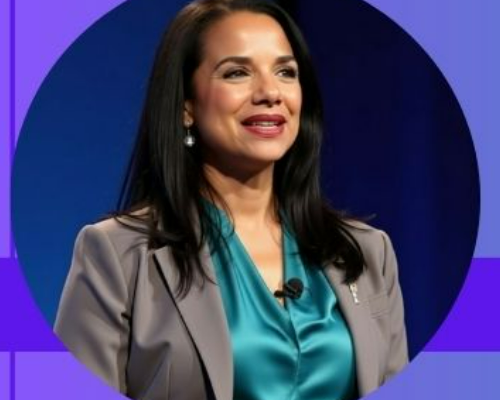
Clarissa M. Rodriguez, Esq. is an attorney, speaker, and former New York State cabinet-level official who led a 1,000-person agency, was appointed by two Governors, and was twice confirmed by the State Senate. A first-generation professional and proud daughter of immigrants, she created The Hero C.O.D.E. to give young people the framework she wishes she had had at their age. View her full professional bio →